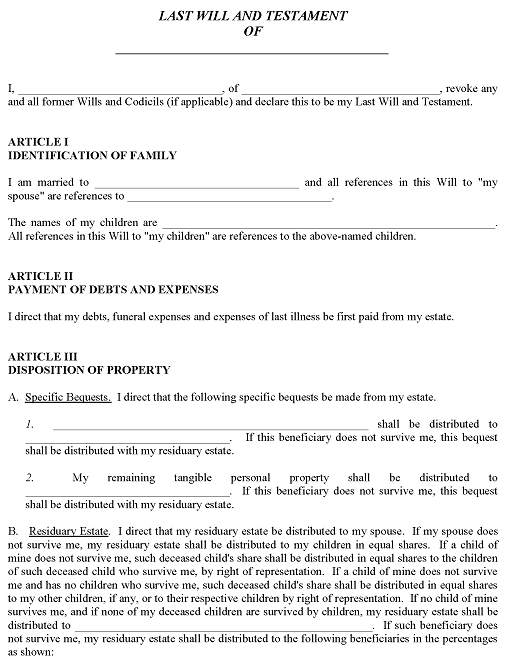
The Connecticut last will and testament, which is a legal document, gives a person known as the testator the opportunity to specify how they want their real estate, personal property, and fiduciary assets to be distributed after their passing. Making a will guarantees that all assets will be distributed among family members, friends, pets, charitable organizations, or anyone else the testator chooses as a beneficiary in line with their wishes.
Table of Contents
Key Elements of a Connecticut Last Will and Testament:
- Testator’s Information: Full legal name, residence, and a declaration that this is your will.
- Executor: A person you appoint to carry out the instructions in your will.
- Beneficiaries: Individuals or organizations who will receive your property or assets.
- Bequests: Specific gifts (e.g., jewelry, cash, real estate) to particular people.
- Guardianship (if applicable): If you have minor children, you can name a guardian.
- Residuary Clause: Covers assets not specifically mentioned in the will.
- Signatures: Must be signed by the testator and witnessed by at least two competent individuals.
Legal Requirements of a Connecticut Last Will and Testament:
- Age: You must be at least 18 years old.
- Capacity: You must be of sound mind.
- Witnesses: Two witnesses must watch you sign the will, and they must also sign in your presence.
- Notarization: Not required to make the will valid, but self-proving wills (to ease probate) are typically notarized.
Why You Should Have a Last Will and Testament in Connecticut:
- Ensures your assets go to the people you choose.
- Prevents disputes among heirs.
- Lets you name a trusted person to manage your estate.
- Allows you to name a guardian for minor children.
Connecticut Statute Governing Wills
Connecticut Statutes Chapter 802a
Connecticut Will Age Requirements
Age Requirements: Any person eighteen years of age or older, and of sound mind, may dispose of his or her estate by will. 1
Connecticut Will Signing Requirements
Will Signing Requirements: A will or codicil must be in writing, subscribed by the testator and attested by two witnesses, each of them subscribing in the testator’s presence; but any will executed according to the laws of the state or country where it was executed may be admitted to probate in this state and shall be effectual to pass any property of the testator situated in this state. 2
Connecticut Will Witness Requirements
Will Witnessing Requirements: The will should be attested by two witnesses, each of them subscribing in the testator’s presence.
Revoking A Connecticut Will
Except under limited circumstances, a will or codicil can be revoked only by burning, cancelling, tearing or obliterating it by the testator or by some person in the testator’s presence by the testator’s direction, or by a later will or codicil. 3
Summary of Connecticut Will Requirements
Anyone 18 years of age or older and of sound mind can write and sign a will in Connecticut. The will should be witnessed by two persons. The will can be revoked only by the testator destroying it, by subsequent will, or by codicil.
Example of a Connecticut Will