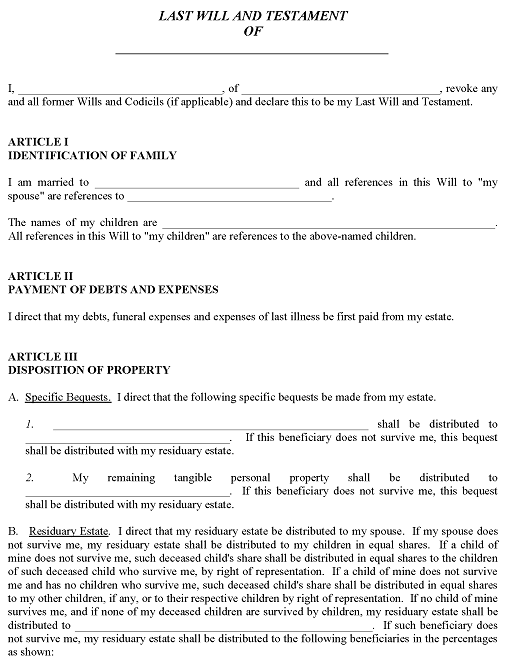
A will, often referred to as a Colorado last will and testament, is a formal legal document that expresses the testator’s desires for the allocation of their possessions, the raising of their child(ren), and other issues following their death. An executor, the technical name for a personal representative chosen by the testator, is a responsible for supervising the transfer of the estate in accordance with the will’s provisions.
Table of Contents
A Colorado Last Will and Testament is a legal document that allows a person (called the testator) to outline how they want their assets and property to be distributed after their death. It also lets them appoint guardians for minor children and name an executor to carry out their wishes.
Key Elements of a Colorado Last Will and Testament:
- Testator: The person making the will must be at least 18 years old and of sound mind.
- Beneficiaries: Individuals or organizations who will receive assets.
- Executor: The person responsible for managing the estate, paying debts, and distributing property.
- Guardianship: Appointment of a guardian for minor children (if applicable).
- Signature: Must be signed by the testator.
- Witnesses: In Colorado, two witnesses must also sign the will (unless it’s a holographic will — see below).
- Holographic Will: Colorado recognizes handwritten wills that are signed by the testator, even if not witnessed, as long as the material portions and the signature are in the testator’s handwriting.
Self-Proving Wills:
- Notarization: Notarization of the will is not required, but a notarized self-proving affidavit can help streamline probate by validating the will without the witnesses needing to testify in court.
Probating a Last Will and Testament:
After death, the will goes through probate in a Colorado court to verify its authenticity and supervise asset distribution.
Who May Create a Colorado Last Will and Testament
An individual 18 or more years of age who is of sound mind may make a will.
Colorado Will Signing Requirements
Will Signing Requirements: The will shall be signed by the testator, or in the testator’s name by some other individual in the testator’s conscious presence and by the testator’s direction. The will must be signed by two witnesses OR notarized.
Colorado Will Witness Requirements
Will Witnessing Requirements: At least two persons each of whom witnessed either the signing or the testator’s acknowledgment of the signature or of the will. The witnesses should be 18 years of age or older and not be named as a beneficiary in the will.
Colorado Self-Proved Wills
Colorado allows self-proved wills. Any will may be simultaneously executed, attested, and made self-proved, by acknowledgment thereof by the testator and affidavits of the witnesses, each made before an officer authorized to administer oaths under the laws of the state where execution occurs and evidenced by the officer’s certificate, under official seal. 1
Revoking A Colorado Last Will and Testament
A Colorado will can be revoked by creating a new will, by executing a codicil or by destroying the will. If the will is destroyed by someone other than the testator, it must be done with the consent and direction of the testator and must be proved by at least two witnesses. 2
Summary of Colorado Will Requirements
Anyone 18 years of age or older and of sound mind can write and sign a will in Colorado. The will should be witnessed by two persons or notarized. If the will is notarized, it does not need to be signed by two witnesses.
Example of a Colorado Will