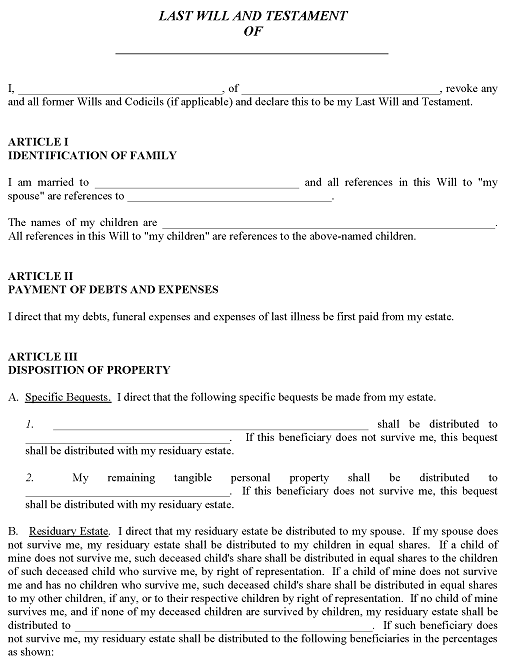
An Alabama last will and testament is a formal legal document that a person, known as the “testator,” uses to specify how their estate will be divided when they pass away. All of the testator’s assets, including bank accounts, life insurance policies, fiduciary funds, and property (both tangible and intangible), may be given to specified beneficiaries in accordance with the terms of the will and as directed by an executor pre-chosen by the testator.
Table of Contents
An Alabama Last Will and Testament you to:
- Name beneficiaries (people or organizations who will inherit their assets)
- Appoint a personal representative (executor) to manage the estate
- Designate guardians for minor children, if applicable
- Specify funeral or burial wishes (optional)
Last Will and Testament Legal Requirements in Alabama
To be valid in Alabama, a Last Will and Testament must meet the following criteria:
- Age and Capacity:
- The testator must be at least 18 years old and of sound mind.
- Written Document:
- The will must be in writing (typed or printed; handwritten wills, called holographic wills, are not valid in Alabama unless they meet specific criteria).
- Signature:
- The testator must sign the will (or direct someone else to sign it in their presence).
- Witnesses:
- It must be signed by two competent witnesses, who are not beneficiaries under the will. They must watch the testator sign or acknowledge the will.
- Notarization (Optional but Recommended):
- Alabama allows self-proving wills, which include a notarized affidavit signed by the testator and witnesses. This helps avoid delays in probate court, as the witnesses don’t need to testify about the will’s validity later.
Why Having an Alabama Last Will and Testament is Important
Having a valid will ensures your assets are distributed according to your wishes and can simplify the probate process for your loved ones. Without a will, Alabama’s intestacy laws determine how your estate is divided, which may not align with your intentions.
Alabama Will Signing Requirements
Will Signing Requirements: The will shall be in writing signed by the testator or in the testator’s name by some other person in the testator’s presence and by his or her direction. 1
Alabama Will Witness Requirements
Will Witnessing Requirements: At least two persons each of whom witnessed either the signing or the testator’s acknowledgment of the signature or of the will. The witnesses should be 18 years of age or older and not be named as a beneficiary in the will.2
Alabama Self-Proved Wills
Alabama allows self-proved wills. “Any will may be simultaneously executed, attested, and made self-proved, by acknowledgment thereof by the testator and affidavits of the witnesses, each made before an officer authorized to administer oaths under the laws of the state where execution occurs and evidenced by the officer’s certificate, under official seal…” 3
Revoking An Alabama Will
An Alabama will can be revoked by codicil or by the testator destroying it. Alabama statute specifies that a will can be revoked by being burning, tearing, cancelling, obliterating, or destroying the will, with the intent and for the purpose of revoking it by the testator or by another person in his presence by his consent and direction. If the physical act is by someone other than the testator, consent and direction of the testator must be proved by at least two witnesses. 4
Summary of Alabama Will Requirements
Anyone 18 years of age or older and of sound mind can write and sign a will in Alabama. The will should be witnessed by two persons meeting the prescribed requirements and having no financial interest in the will. If the will is notarized, it is considered to be self-proved.
Example of an Alabama Will