A cargo trailer bill of sale form is an essential legal document used to record the transfer of ownership of a cargo trailer from a seller to a buyer. Whether the trailer is enclosed, open-air, utility-based, or designed for commercial hauling, documenting the transaction in writing helps protect both parties and establishes a clear record of the sale. This document can be especially important when registering the trailer with a state motor vehicle agency, obtaining insurance coverage, or resolving disputes related to ownership or condition after the transaction is completed.
Table of Contents
Cargo trailers are frequently bought and sold through private-party transactions, making a detailed bill of sale one of the most important parts of the process. Unlike dealership purchases that often include extensive paperwork, private sales rely heavily on accurate documentation created by the buyer and seller themselves. A professionally prepared cargo trailer bill of sale helps ensure the transfer is properly documented and legally recognizable.
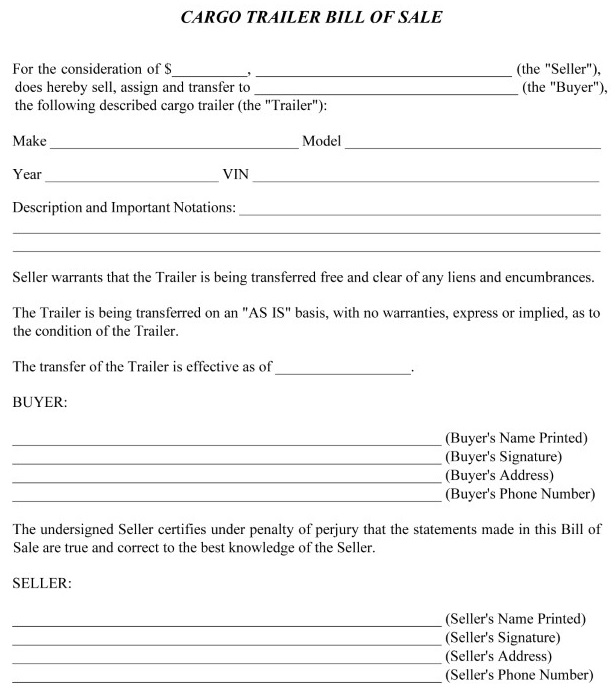
Example of Cargo Trailer Bill of Sale Form
What Is a Cargo Trailer Bill of Sale?
A cargo trailer bill of sale is a written agreement that outlines the details of a trailer sale. It confirms that the seller has transferred ownership rights to the buyer in exchange for an agreed purchase price. The document serves as proof that the transaction occurred and may be used for legal, financial, tax, and registration purposes.
The form typically includes identifying information about the trailer, such as:
- Make
- Model
- Year
- Vehicle Identification Number (VIN)
- Trailer dimensions
- Color
- License plate number (if applicable)
- Weight classification
It also includes the names and addresses of both parties, the sale amount, payment method, and the date of transfer. In some states, notarization may be recommended or required for added legal validity.
Why a Cargo Trailer Bill of Sale Is Important
A cargo trailer may represent a substantial financial investment, particularly for businesses, contractors, landscapers, or individuals transporting valuable equipment. A properly completed bill of sale creates a verifiable paper trail that protects the interests of everyone involved.
Benefits for the Buyer
For the buyer, the bill of sale helps establish legal ownership of the trailer. It may be required to:
- Register the trailer with the DMV
- Apply for a title
- Obtain trailer insurance
- Calculate taxes and registration fees
- Prove ownership in case of theft or disputes
The document can also help verify the agreed-upon purchase price and condition of the trailer at the time of sale.
Benefits for the Seller
For the seller, the bill of sale serves as evidence that ownership has been transferred to another party. This can help reduce liability for future accidents, tickets, or damages involving the trailer after the sale date. Sellers should keep a signed copy of the completed document for their records in case questions arise later regarding ownership or responsibility.
Information Included in a Cargo Trailer Bill of Sale
A comprehensive cargo trailer bill of sale should contain accurate and detailed information. Incomplete or incorrect forms may cause delays in registration or create legal complications later.
Common sections found in the form include:
Buyer and Seller Information
The legal names, mailing addresses, phone numbers, and signatures of both parties should be included. Some forms may also request driver’s license numbers for identification purposes.
Trailer Description
The trailer section should identify the cargo trailer clearly and precisely. Important details often include:
- Trailer make and manufacturer
- Model name or number
- Year of manufacture
- VIN or serial number
- Body style
- Empty weight
- Color
- Axle configuration
The more detailed the description, the easier it becomes to confirm ownership and avoid misunderstandings.
Purchase Details
This section outlines the financial terms of the sale, including:
- Total purchase price
- Date of sale
- Payment method
- Deposit amount (if applicable)
Including accurate payment details creates transparency between the buyer and seller.
Condition of the Trailer
Most private trailer sales are completed “as-is,” meaning the buyer accepts the trailer in its current condition without warranties. Including an as-is clause can help protect the seller from future claims regarding repairs or defects discovered after the transaction.
However, if the seller agrees to provide warranties or disclose known issues, these details should be clearly stated in writing.
State Requirements for Cargo Trailer Sales
Requirements for trailer registration and ownership transfer vary by state. Some states require trailers to be titled, while others only require registration depending on the trailer’s weight or intended use. A cargo trailer bill of sale may be mandatory when:
- The trailer is homemade
- The original title is unavailable
- The trailer is older and exempt from title requirements
- The state DMV requests proof of ownership
Because state laws differ, buyers and sellers should verify local regulations before completing the transaction. Providing complete documentation can prevent delays during the registration process.
Using the Form for Homemade Cargo Trailers
Homemade cargo trailers often require additional documentation because they may not have a manufacturer-issued title or VIN. In these situations, the bill of sale becomes even more important. States may require:
- Weight certificates
- VIN inspections
- Receipts for materials
- Affidavits of ownership
A detailed bill of sale can help establish a clear ownership history for custom-built trailers.
Tips for Completing a Cargo Trailer Sale
When completing a private cargo trailer transaction, both parties should take steps to protect themselves and ensure accuracy.
Verify the VIN
The VIN on the trailer should match all registration documents and titles. Buyers should inspect the VIN carefully for signs of tampering or alteration.
Inspect the Trailer Thoroughly
Before finalizing the sale, buyers should examine the trailer’s condition, including:
- Tires
- Brakes
- Lights
- Hitch assembly
- Flooring
- Roof and frame
- Electrical systems
A written inspection checklist can be useful for documenting the trailer’s condition.
Keep Copies of All Documents
Both parties should retain signed copies of the bill of sale, title transfer documents, maintenance records, and receipts. Maintaining organized records can simplify future registration or resale transactions.
When to Use a Cargo Trailer Bill of Sale
This form can be used in many types of trailer transactions, including:
- Private-party sales
- Business equipment transfers
- Utility trailer purchases
- Enclosed cargo trailer sales
- Interstate trailer transactions
- Homemade trailer ownership transfers
Using a written legal document helps establish credibility and creates a formal record of the agreement.
A cargo trailer bill of sale form provides important legal and financial protection for both buyers and sellers. By clearly documenting the transfer of ownership, the form helps reduce disputes, simplifies registration, and creates an official record of the transaction. Whether the trailer is used for personal hauling, commercial transportation, or recreational purposes, completing a detailed bill of sale is a smart and responsible step.
Carefully reviewing all information before signing the document can help ensure the transaction proceeds smoothly and complies with applicable state requirements. A properly prepared cargo trailer bill of sale not only confirms ownership transfer but also supports transparency, accountability, and long-term recordkeeping for both parties involved.

Cargo Trailer Bill of Sale Forms
Microsoft Word
Cargo Trailer Bill of Sale Form Word