An appliance bill of sale is a written document used to record the transfer of ownership of household or commercial appliances from a seller to a buyer. This document serves as legal proof that a transaction occurred and outlines the specific terms agreed upon by both parties. Whether the appliance being sold is new or used, a properly completed bill of sale helps protect the interests of everyone involved in the transaction.
Table of Contents
Common appliances covered by this form include refrigerators, ovens, stoves, dishwashers, washing machines, dryers, freezers, microwaves, air conditioners, and other major household or commercial equipment. An appliance bill of sale is frequently used in private sales where there is no retail invoice or warranty documentation provided through a store or dealer.
The primary purpose of an appliance bill of sale is to create an official record of the transaction. It confirms important details such as the names and contact information of the buyer and seller, the purchase price, the date of sale, and a description of the appliance being transferred. Including identifying information such as the make, model, serial number, color, and condition of the appliance helps prevent future disputes regarding ownership or the exact item sold.
In many private transactions, appliances are sold “as-is.” This means the buyer accepts the appliance in its current condition at the time of sale, with no guarantees or warranties provided unless specifically stated in writing. Clearly documenting the condition of the appliance within the bill of sale is highly recommended. Sellers should disclose any known defects, repairs, or operational issues to avoid potential legal disputes after the sale is completed.
For buyers, an appliance bill of sale provides proof of purchase that may be useful for insurance purposes, warranty registration, property management records, or future resale transactions. For sellers, the document helps demonstrate that ownership was legally transferred and that responsibility for the appliance ended on the date of sale.
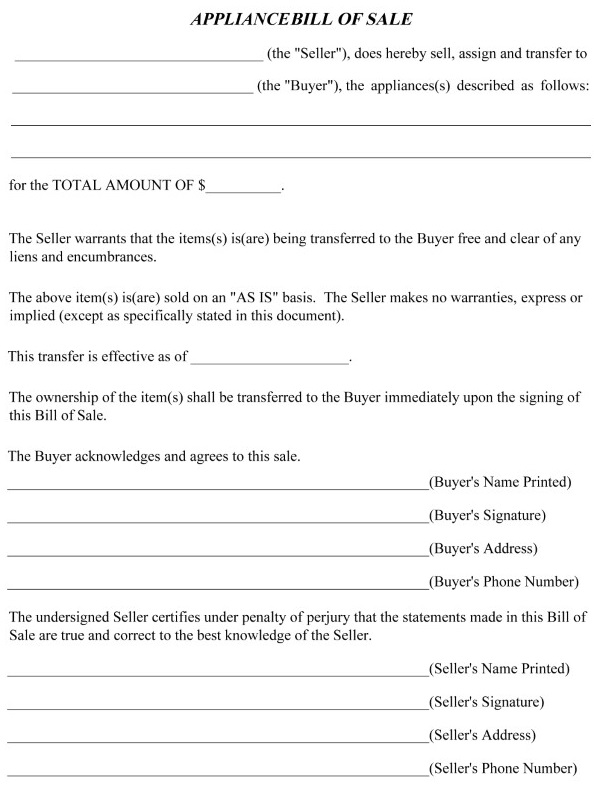
Example of Bill of Sale For Appliances
nformation Included in an Appliance Bill of Sale
A comprehensive appliance bill of sale should contain the following details:
- Full legal names and addresses of the buyer and seller
- Date of the transaction
- Purchase price and payment method
- Detailed description of the appliance
- Manufacturer, model number, and serial number
- Current condition of the appliance
- Any warranties or disclaimers
- Signatures of both parties
Including these details creates a stronger and more enforceable record of the transaction.
Why an Appliance Bill of Sale Is Important
Even though appliance sales are often informal, documenting the agreement in writing is strongly recommended. Verbal agreements can easily lead to misunderstandings about payment terms, condition, delivery responsibilities, or included accessories. A written bill of sale reduces uncertainty by clearly defining the expectations of both parties.
This document can also help establish ownership if questions arise later regarding stolen property, unpaid balances, or equipment disputes. In commercial settings, appliance bills of sale are commonly used for inventory tracking and accounting documentation.
For landlords and property managers, appliance bills of sale can be especially valuable when purchasing used appliances for rental properties. Maintaining organized transaction records helps verify ownership and supports maintenance and depreciation records for business purposes.
Appliance Condition and “As-Is” Sales
Used appliances may experience wear and tear over time, making it essential to accurately describe their condition before the transaction is finalized. Sellers should note whether the appliance is fully operational, partially functional, refurbished, or in need of repair. Any missing parts, cosmetic damage, or known mechanical issues should also be disclosed in writing.
Most private appliance sales are completed on an “as-is” basis. This protects sellers from future claims after the appliance changes ownership. Buyers are encouraged to inspect the appliance thoroughly, test it when possible, and ask questions regarding prior repairs or maintenance history before making payment.
Completing the Appliance Bill of Sale
After all information has been entered, both parties should carefully review the document for accuracy. Each party should sign and retain a copy for their records. While notarization is generally not required for appliance sales, some individuals may choose to have the document notarized for additional legal protection, particularly when high-value commercial equipment is involved.
Using a professionally prepared appliance bill of sale helps ensure that the transaction is properly documented, legally supported, and clearly understood by both the buyer and seller.

Bill of Sale Forms For Appliances
Microsoft Word
Bill of Sale For Appliances Word