An Art Bill of Sale is a legally significant document used to record the transfer of ownership of artwork from a seller to a buyer. Whether the transaction involves a painting, sculpture, photograph, collectible print, antique artwork, or another valuable creative piece, this document provides written evidence of the sale and helps protect both parties from future disputes. Proper documentation is especially important in art transactions because artwork can appreciate in value over time, may have authenticity concerns, and often carries unique provenance histories that affect ownership rights and market value.
Table of Contents
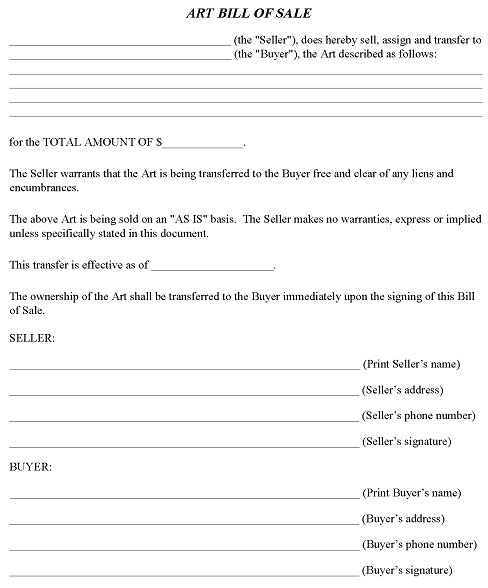
Using a professionally prepared Art Bill of Sale helps establish a clear and verifiable record of the transaction. The form identifies the buyer and seller, describes the artwork being sold, states the agreed purchase price, and confirms the date ownership was transferred. In many cases, the document may also include additional terms regarding authenticity, warranties, copyright ownership, or the condition of the artwork at the time of sale.
Art transactions can range from small private sales between collectors to high-value gallery and auction purchases. Regardless of the size of the transaction, maintaining proper records is essential. A completed bill of sale serves as proof that the buyer legally acquired the artwork and that the seller voluntarily transferred ownership under the agreed terms. This documentation may later be used for insurance purposes, tax reporting, estate planning, appraisal records, or resale verification.
Example of Art Bill of Sale Form
Why an Art Bill of Sale Is Important
Artwork often represents a substantial financial investment, making accurate documentation critical. Unlike many ordinary consumer purchases, artwork may have historical significance, rarity, or collectible value that increases over time. An Art Bill of Sale helps establish a chain of ownership, commonly referred to as provenance, which can directly influence the artwork’s future market value and authenticity verification.
A detailed bill of sale can help:
- Confirm legal ownership of the artwork
- Document the agreed purchase price
- Identify the artist and artwork details
- Protect both parties in the event of a dispute
- Assist with insurance coverage and claims
- Support future appraisals and resale transactions
- Establish provenance for collectors and galleries
- Create tax and accounting records
Without proper documentation, disputes may arise regarding payment terms, authenticity, ownership rights, or the physical condition of the artwork. A written agreement significantly reduces uncertainty and provides both parties with clear evidence of the transaction.
Information Commonly Included in an Art Bill of Sale
An effective Art Bill of Sale should contain complete and accurate information about the transaction. The more detailed the document, the stronger its value as legal and financial evidence. Typical information included in the form may consist of:
- Full legal names and contact information of the buyer and seller
- Date of the sale
- Purchase price and payment method
- Detailed description of the artwork
- Artist’s name
- Medium used (oil, acrylic, watercolor, bronze, etc.)
- Dimensions of the artwork
- Year created, if known
- Edition number for limited edition works
- Serial numbers or identifying marks
- Condition of the artwork
- Signatures of both parties
Additional clauses may also be included depending on the complexity of the transaction. For example, some sales specify whether copyright ownership remains with the artist or transfers to the buyer. Others may include statements regarding authenticity certificates, restoration history, or gallery representation.
Types of Artwork Covered
An Art Bill of Sale may be used for many different forms of artwork and collectibles, including:
- Original paintings
- Sculptures
- Photography
- Drawings and sketches
- Digital artwork
- Limited edition prints
- Mixed media artwork
- Antiques and collectibles
- Handmade crafts
- Murals and installations
Collectors, galleries, artists, museums, auction houses, and private buyers all commonly use art bills of sale to document transactions involving creative works.
Authenticity and Provenance Considerations
One of the most important aspects of art ownership is authenticity. Buyers frequently want assurance that the artwork is genuine and legally owned by the seller. An Art Bill of Sale can include representations by the seller confirming that the artwork is authentic to the best of their knowledge and that they possess the legal right to sell it.
For valuable artwork, supporting documentation may also accompany the bill of sale, including:
- Certificates of authenticity
- Prior ownership records
- Gallery invoices
- Exhibition history
- Appraisal reports
- Restoration records
Maintaining accurate provenance records can significantly increase the artwork’s long-term value and desirability among collectors and investors.
Private Sales vs. Gallery Sales
Art bills of sale are useful in both private and commercial transactions. Private sales between individuals may involve less formal procedures, making written documentation even more important. Galleries and auction houses often provide their own detailed contracts and invoices, but an additional bill of sale can still provide valuable protection and clarity.
Private transactions can carry increased risk because buyers may have limited information regarding the artwork’s authenticity or ownership history. A comprehensive bill of sale helps establish transparency and demonstrates that both parties agreed to the transaction terms voluntarily.
Legal and Financial Benefits
Although laws vary by jurisdiction, an Art Bill of Sale can provide important legal protections if disagreements arise after the transaction. Courts and insurance companies often rely on written documentation when determining ownership or resolving disputes. A properly completed bill of sale may help demonstrate that the transaction occurred legally and that both parties accepted the stated terms.
The document can also assist with:
- Capital gains tax calculations
- Estate asset inventories
- Donation documentation
- Insurance policy underwriting
- Customs and international shipping records
- Business accounting records
Collectors and investors frequently maintain organized documentation for every artwork purchase to support future valuations and resale opportunities.
Completing the Form Properly
When preparing an Art Bill of Sale, accuracy is essential. Both parties should carefully review all information before signing the document. Descriptions of the artwork should be as detailed as possible to avoid confusion later. Photographs of the artwork may also be attached to the agreement for additional identification purposes.
After signing, each party should retain a copy of the completed document for their records. In higher-value transactions, notarization may provide additional legal credibility, although it is not always required by law.
Using a professionally structured Art Bill of Sale helps ensure the transaction is documented clearly and thoroughly. Whether buying or selling a single piece of artwork or managing a larger collection, maintaining proper ownership records is a critical step in protecting the value and integrity of the transaction.
