An animal bill of sale form is a critical legal document used to record the transfer of ownership of an animal from a seller to a buyer. Whether the transaction involves livestock, domestic pets, horses, poultry, exotic animals, or breeding stock, a properly completed bill of sale helps establish a clear and verifiable record of the agreement. This document protects both parties by outlining important details about the animal, purchase terms, and the conditions of the sale.
Table of Contents
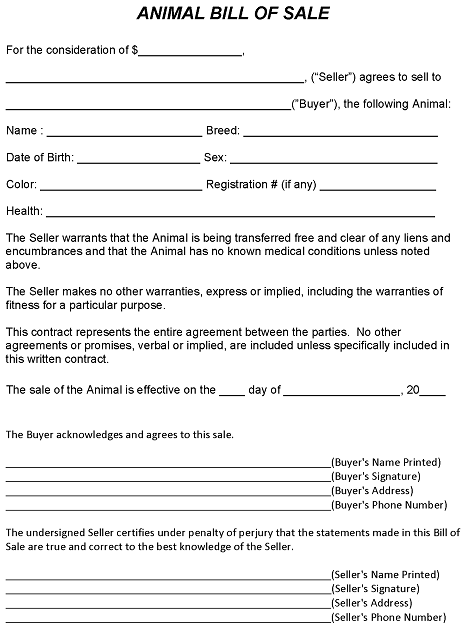
A comprehensive animal bill of sale should identify the buyer and seller by full legal name and contact information. It should also contain a detailed description of the animal being sold, including species, breed, color, age, sex, markings, registration numbers, microchip information, and any identifying tags or tattoos. Including these details reduces the likelihood of disputes and helps confirm the exact animal involved in the transaction.
The form should clearly state the agreed purchase price and the date of transfer. If a deposit was paid or if installment payments are permitted, the payment arrangement should be documented in writing. Many sellers also include statements regarding the health condition of the animal at the time of sale, vaccination records, veterinary examinations, and whether the animal is being sold “as-is.” In some situations, warranties or guarantees may apply, particularly when selling breeding animals, show animals, or registered livestock.
For buyers, an animal bill of sale provides proof of ownership that may be required for registration, transportation, insurance, licensing, or veterinary care. For sellers, the document helps demonstrate that ownership has been legally transferred and that the buyer accepted the animal under the agreed terms. This can be especially important if future disputes arise regarding health conditions, breeding capability, temperament, or liability.
Animal bill of sale forms are commonly used in private sales, farm transactions, rescue adoptions, kennel operations, equine transfers, and agricultural businesses. Many states do not legally require a bill of sale for every animal transaction, but maintaining accurate written records is strongly recommended. Certain regulated animals or interstate transfers may also require additional documentation such as health certificates, vaccination records, import permits, or registration paperwork.
Example of Animal Bill of Sale Form
When drafting an animal bill of sale, accuracy is essential. Both parties should carefully review the information before signing the document. It is advisable for each party to retain a signed copy for their records. In some cases, notarization may provide an additional level of legal protection and verification, particularly for high-value transactions involving horses, cattle, breeding animals, or exotic species.
An effective animal bill of sale can also help clarify responsibility after the transaction is completed. The document may specify the exact date and time ownership transfers to the buyer, which can affect liability for transportation, veterinary expenses, injuries, or property damage. Including these terms in writing minimizes confusion and establishes a clear understanding between the parties involved.
In agricultural and commercial settings, animal bill of sale forms often play an important role in inventory management and tax documentation. Farmers, ranchers, and breeders may use the form to support accounting records, breeding logs, or livestock ownership verification. Maintaining organized documentation is especially valuable during audits, inspections, or insurance claims.
For registered animals, the bill of sale may also reference pedigree records, registration certificates, lineage information, or breeding rights. Buyers purchasing purebred or competition animals frequently rely on this information to verify authenticity and ownership history. Sellers should ensure that all registration details are accurate and that any transfer requirements established by breed associations or registries are properly completed.
Transportation considerations should also be addressed during the sale process. Depending on the species and destination, state or federal regulations may require veterinary inspections, vaccination certificates, or transportation permits. Including references to these documents within the bill of sale can help create a more complete transaction record and demonstrate compliance with applicable regulations.
Another important factor is disclosure. Sellers should disclose any known medical conditions, behavioral issues, injuries, or special care requirements associated with the animal. Honest disclosure helps reduce the risk of future legal disputes and promotes ethical sales practices. Buyers should take the opportunity to inspect the animal thoroughly and request veterinary evaluations when appropriate before completing the purchase.
An animal bill of sale is particularly valuable in situations involving valuable breeding stock, working animals, or performance animals. Horses used for racing or competition, livestock intended for breeding programs, and trained service animals often involve substantial financial investment. A detailed written agreement provides additional protection for all parties and helps preserve the integrity of the transaction.
Ultimately, an animal bill of sale form serves as a formal record that documents the lawful transfer of ownership while clearly defining the rights and responsibilities of both buyer and seller. By creating a complete and accurate agreement, both parties can proceed with greater confidence, reduce potential misunderstandings, and establish a reliable legal record of the transaction.
