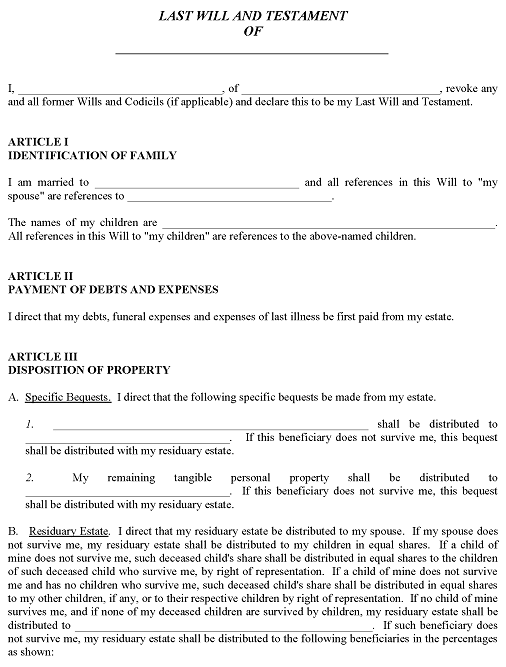
The Alaska last will and testament is an official document that enables the testator—the individual who made the will—to specify how they want their estate to be managed after they pass away. A testator can choose someone they trust to handle the settlement of their affairs, name a guardian to look after their children, and distribute possessions by means of a will.
Table of Contents
An Alaska Last Will and Testament is a legal document used by an individual to:
- Specify how their property and assets should be distributed after their death.
- Name an executor (also called a personal representative) to carry out their wishes.
- Appoint guardians for minor children, if applicable.
- Optionally include other instructions such as funeral arrangements.
Key Features of an Alaska Will:
- Legal Requirements of an Alaska Will:
- The testator must be at least 18 years old and of sound mind.
- The will must be in writing.
- It must be signed by the testator (or by someone else at the testator’s direction and in their presence).
- It must be witnessed by at least two people, who also sign the will.
- Self-Proving Wills:
- Alaska recognizes self-proving wills, meaning the will can be validated without the witnesses having to appear in court after the testator’s death. This requires a notarized affidavit signed by the testator and witnesses.
- Holographic Wills:
- Alaska recognizes holographic wills, which are handwritten and signed by the testator, even without witnesses—as long as the material provisions and signature are in the testator’s handwriting.
- Community Property:
- Alaska is an opt-in community property state, meaning spouses can choose to have their assets treated as community property through a legal agreement, which may impact how property is distributed in the will.
- Revocation:
- A will can be revoked or replaced at any time before the testator’s death, usually by creating a new will, executing a codicil, or physically destroying the will.
Why Having an Alaska Last Will and Testament is Important:
Creating a will ensures that:
- Your property goes to the people or organizations you choose.
- Disputes among family members are minimized.
- The probate process (court process to distribute property) is smoother.
- You maintain control over what happens after your death.
Alaska Will Signing Requirements
Will Signing Requirements: The will must be in writing and must be signed by the testator or in the testator’s name by another individual in the testator’s conscious presence and by the testator’s direction. 1
Holographic Wills in Alaska
Holographic wills are recognized in Alaska, whether or not witnessed, if the signature and material portions of the document are in the testator’s handwriting. 2
Alaska Will Witness Requirements
Will Witnessing Requirements: The will must be signed by at least two individuals, each of whom signs within a reasonable time after either the witnessing the signing of the will or upon the testator’s acknowledgment of that signature on the will. 3 The witnesses should be competent to be a witness. The Alaska statute is unique in that it specifies that the signing of a will by an interested witness DOES NOT invalidate the will or a provision of it. This means the witness can be listed in the will as a beneficiary.
Alaska Self-Proved Wills
The will shall be considered self-proved if it is notarized after being signed by the testator as well as two witnesses. A will may be simultaneously executed, attested, and made self-proved, by acknowledgment of the will by the testator and affidavits of the witnesses. 4
Revoking An Alaska Will
An Alaska last will and testament can be revoked by codicil or by the testator performing a revocatory act on the will. Revocatory acts include burning, tearing, canceling, obliterating, or destroying the will or any part of it. 5
Summary of Alaska Will Requirements
Anyone 18 years of age or older and of sound mind can write and sign a will in Alaska. The will should be witnessed by two persons who can be mentioned in the will as beneficiaries. Provided that the will is signed by the testator and witnessed by two persons, the will is considered to be self-proved if it is notarized.
Example of an Alaska Will