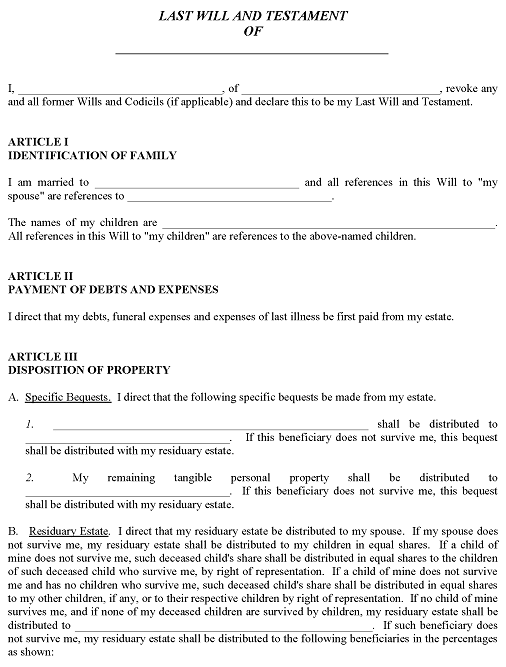
The Kansas last will and testament is a legal document that, upon the testator’s passing, offers written instructions for the appropriate distribution of the testator’s assets among friends and family, and even nonprofit organizations. The testator is the person to whom the will belongs. The preparation of a will document gives the testator the certainty that their personal, real, fiduciary, and virtual assets will be transferred in accordance with their preferences, rather than being settled by any choices that are made throughout the probate process.
Table of Contents
A Kansas Last Will and Testament is a legal document that outlines how a person’s property, assets, and responsibilities will be distributed or managed after their death. It’s governed by Kansas state law and helps ensure your wishes are followed.
Key Elements of a Kansas Last Will and Testament:
- Testator – The person making the will.
- Beneficiaries – Individuals or organizations who receive your assets.
- Executor – The person you name to carry out your wishes.
- Guardianship – (If applicable) You can name a guardian for minor children.
- Distribution of Assets – Clear instructions on who receives what.
- Signatures & Witnesses – Kansas law requires:
- The testator to be at least 18 years old and of sound mind.
- The will to be signed by the testator.
- Two competent witnesses (not beneficiaries) to also sign the will.
Additional Information About Kansas Wills:
- Holographic (handwritten) wills are not valid unless properly witnessed.
- Oral wills are not recognized in Kansas.
- Self-proving affidavits (a notarized statement that helps avoid needing witnesses in probate) are allowed and often recommended.
Why Having a Kansas Last Will and Testament is Important:
A properly executed will can:
- Distribute assets as you choose, rather than having them distributed according to Kansas intestacy laws.
- Prevent family disputes over assets and other financial matters.
- Ensure your children or dependents are cared for.
State Statute Governing Kansas Wills
Kansas Statutes Chapter 59 Article 6
Kansas Will Age Requirements
Age Requirements: Any person of sound mind, and possessing the rights of majority, may dispose of any or all of his or her property by will, subject to the provisions of this act. 1 Kansas statute defines the rights of minority as anyone 18 years of age or older, or 16 years of age or over who is or has been married. 2
Kansas Will Signing Requirements
Will Signing Requirements: Every will, except an oral will as provided in K.S.A. 59-608 and amendments thereto, shall be in writing, and signed at the end by the party making the will, or by some other person in the presence and by the express direction of the testator.
Kansas Will Witness Requirements
Will Witnessing Requirements: The will must be attested and subscribed in the presence of two or more competent witnesses, who saw the testator subscribe or heard the testator acknowledge the will.
Kansas Self-Proved Wills
A Kansas may be made self-proved at the time of its execution or at any subsequent date during the lifetimes of the testator and the witnesses if such acknowledgments and affidavits are made before an officer authorized to take acknowledgments to deeds of conveyance and to administer oaths (a notary).
Summary of Kansas Will Requirements
Anyone 16 years of age or older and of sound mind can write and sign a will in Kansas if they are or were married. Persons who have not been married must be 18 or older. The will should be witnessed by two persons. The will is considered self-proved if it is also notarized.
Example of Kansas Last Will and Testament