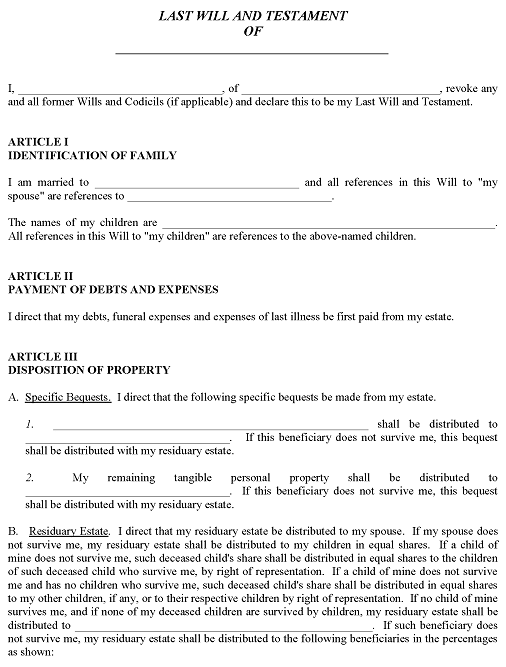
The Iowa last will and testament is a formal legal document that allows a person to predetermine the distribution of their estate to specific beneficiaries. The testator can specify instructions in a will about how their digital assets, insurance policies, real estate, bank accounts, and other assets are to be distributed. The Iowa last will and testament, is also known as simply a “will.” The will also names the personal representative, also known as an executor, who is responsible for overseeing the distribution of the estate in compliance with the terms of the will.
Table of Contents
An Iowa Last Will and Testament is a legal document that allows a person (called the testator) to state how they want their property and assets to be distributed after their death. It also allows the testator to:
- Name beneficiaries (those who will receive assets)
- Appoint a personal representative (executor) to carry out the terms of the will
- Designate a guardian for any minor children
Iowa Last Will and Testament Requirements
To be valid in Iowa, a Last Will and Testament must meet the following:
- Age and Capacity:
- The testator must be at least 18 years old
- They must be of sound mind (mentally competent)
- Written Document:
- The will must be in writing (typed or printed)
- Signature:
- The testator must sign the will
- If the testator is physically unable, someone else may sign on their behalf at their direction and in their presence
- Witnesses:
- At least two competent witnesses must sign the will
- The witnesses must see the testator sign or acknowledge the will
- Notarization (optional but recommended):
- Iowa does not require notarization for a will to be valid
- However, a will can be made “self-proving” if the testator and witnesses sign an affidavit in front of a notary. This speeds up probate by avoiding the need for witnesses to testify later.
Additional Information:
Holographic wills (handwritten without witnesses) are not valid in Iowa.
A will can be revoked or amended (via a codicil) at any time while the testator is alive and mentally competent.
State Code Governing Iowa Wills
Iowa Code Chapter 633 Subchapter VI
Iowa Will Age Requirements
Age Requirements: State code specifies that “any person of age” can dispose of property by creating a will but the code does not mention the exact 18 to which it refers. Most competent council believe the age is 18 years or older.. The testator can discharge all property but must reserve enough to pay the debts and expenses of the estate. 1
Iowa Will Witness Requirements
Will Witnessing Requirements: Any person who is sixteen years of age or older may be a witness to the will. The will must be signed by at least two persons who either witness the signing of the will by the testator or the testator’s acknowledgment of the signature on the will.
Iowa Self-Proved Wills
Iowa recognizes self-proved wills. A will may be simultaneously executed, attested, and made self-proved, by acknowledgment thereof by the testator and affidavits of the witnesses, each made before an officer authorized to administer oaths under the laws of the state and under official seal.
Revoking An Iowa Will
A last will and testament may be revoked in its entirety or in part by being destroyed by the testator or by someone else at his or her direction, or by creating a subsequent will that is witnessed in the same manner as the original will.
Example of Iowa Last Will and Testament