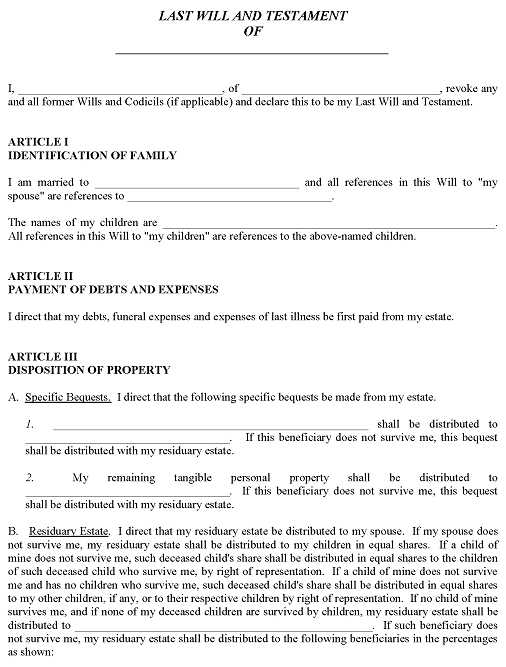
The Illinois last will and testament, also known as a will, is a legal document that details the testator’s wishes regarding the distribution of their assets, the upbringing of their children, and other matters after their passing. A personal representative, also known as an executor, is a responsible individual appointed to oversee the distribution of the estate in compliance with the terms of the will.
Table of Contents
An Illinois Last Will and Testament is a legal document that allows a person (called the testator) to outline how they want their property and assets distributed after their death. It also allows the testator to:
- Name beneficiaries (the people or organizations who will receive the assets)
- Appoint an executor (the person responsible for managing the estate and ensuring the terms of the will are carried out)
- Designate guardians for minor children, if applicable
- Make specific bequests (such as heirlooms, money, or property to certain individuals)
Key Requirements For a Last Will and Testament in Illinois
For a will to be valid under Illinois law, it must meet certain criteria:
- Age and capacity: The testator must be at least 18 years old and of sound mind.
- Written document: The will must be in writing (typed or printed — handwritten wills are not valid unless they meet specific formalities, which are rare in Illinois).
- Signed: The testator must sign the will.
- Witnesses: The signing must be witnessed by two individuals, who must also sign the will in the testator’s presence and in each other’s presence.
Notarization:
- Notarization: While not legally required in Illinois, having a self-proving affidavit notarized can speed up probate (the court process for distributing the estate).
Why It’s Important To Have an Illinois Last Will and Testament:
Having a valid will in place ensures that your wishes are followed. Without a will, Illinois intestacy laws determine who inherits your estate, which may not reflect your preferences.
State Statute Governing Illinois Wills
Illinois Compiled Statutes Chapter 755 ILCS 5/4
Illinois Will Age Requirements
Age Requirements: Every person who has attained the age of 18 years and is of sound mind and memory has power to bequeath by will the real and personal estate which he or she has.
Illinois Will Signing Requirements
Will Signing Requirements: The will shall be in writing, signed by the testator or by some person in his presence and by his direction.
Illinois Will Witness Requirements
Will Witnessing Requirements: The will should be signed in the presence of two or more credible witnesses, who should also sign the document. 1
Revoking An Illinois Will
An Illinois will can be revoked by physically destroying it, by creating a subsequent will that declares the previous will void, or by executing an instrument that declares the revocation (a codicil), signed and attested in the same manner as the original will. A will may also be revoked by creating another will that is inconsistent with the previous will. This is consistent with the general principle that the most recent will should have priority over previous versions.
Example of Illinois Last Will and Testament