A bicycle bill of sale is a valuable legal document that provides written proof that ownership of a bicycle has been transferred from one party to another. Whether the bicycle is being sold privately, gifted, or transferred as part of a trade, a properly completed bill of sale helps protect both the buyer and seller by creating a clear transaction record. This document can help prevent future disputes involving ownership, payment, condition, or identification of the bicycle.
Table of Contents
When purchasing a used bicycle, buyers should always request a completed bill of sale before finalizing the transaction. The document serves as evidence that the bicycle was acquired legally and may be useful if the bicycle must later be registered, insured, or recovered after theft. Sellers also benefit because the form establishes the exact date ownership changed hands, limiting potential liability after the sale is completed.
A bicycle bill of sale should contain detailed information about both parties involved in the transaction. This generally includes the full legal names and addresses of the buyer and seller, along with contact information when available. Recording accurate personal details helps create a reliable paper trail and may be important if questions arise regarding the transaction at a later date.
Example of Bicycle Billl of Sale
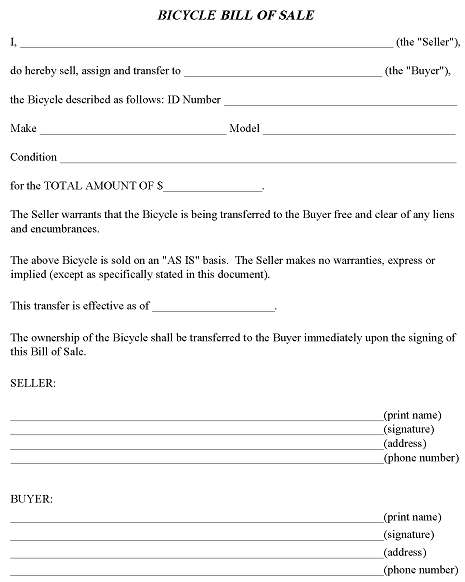
The form should also include a thorough description of the bicycle itself. Important identifying details typically include:
- Manufacturer or brand name
- Model name or number
- Bicycle type (road bike, mountain bike, BMX, electric bicycle, etc.)
- Frame color
- Frame material
- Wheel size
- Serial number or frame number
- Year of manufacture if known
- Additional accessories or included equipment
Including the bicycle’s serial number is especially important because it uniquely identifies the bike and helps verify lawful ownership. Buyers should inspect the serial number directly on the bicycle frame and confirm it matches the information listed on the bill of sale.
The purchase price should be clearly stated within the document. If the bicycle is being transferred as a gift or trade, the form should specify that no monetary payment was involved. Listing the exact payment amount creates a formal financial record that may be useful for tax purposes, accounting records, or insurance documentation.
Most bicycle bill of sale forms also include language stating that the bicycle is sold “as-is.” An as-is clause means the buyer accepts the bicycle in its present condition without guarantees or warranties from the seller unless otherwise stated in writing. This provision protects sellers from future claims regarding mechanical issues or defects discovered after the transaction has been completed. Buyers should carefully inspect the bicycle before signing the agreement and ask questions regarding any visible wear, damage, or maintenance history.
For additional protection, buyers may wish to document the bicycle’s condition at the time of sale. This can include noting scratches, dents, worn components, upgraded parts, or recent repairs. Some parties even attach photographs to the bill of sale for further documentation. Detailed records can reduce misunderstandings and provide evidence if disagreements occur later.
Electric bicycles, commonly known as e-bikes, often require additional information because they contain electrical components and batteries. When completing a bill of sale for an e-bike, parties should consider including:
- Battery type and capacity
- Charger information
- Motor wattage
- Odometer or mileage reading if available
- Existing warranties on electrical components
Including these details can help the buyer better understand the bicycle’s condition and estimated value.
A bicycle bill of sale may also be useful for law enforcement or insurance purposes. If a bicycle is stolen and later recovered, the bill of sale can help establish rightful ownership. Insurance providers may also request proof of ownership when processing theft or damage claims. Maintaining copies of the completed document in a secure location is strongly recommended.
Although many states do not legally require a bicycle bill of sale for private transactions, using one is considered a best practice for any sale involving valuable property. The document creates transparency between the parties and provides written evidence that the transaction occurred voluntarily and under agreed terms.
Both the buyer and seller should carefully review the completed document before signing. Once signed and dated, each party should retain a copy for their personal records. Some individuals also choose to have the form notarized for additional authentication, although notarization is generally optional unless specifically required by local law or requested by one of the parties.
Using a professionally prepared bicycle bill of sale form helps ensure all critical transaction details are properly documented. A complete and accurate form can simplify ownership verification, reduce legal risks, and provide peace of mind for everyone involved in the transaction.

Bicycle Bill of Sale Forms
Microsoft Word
Bicycle Bill of Sale Form Word